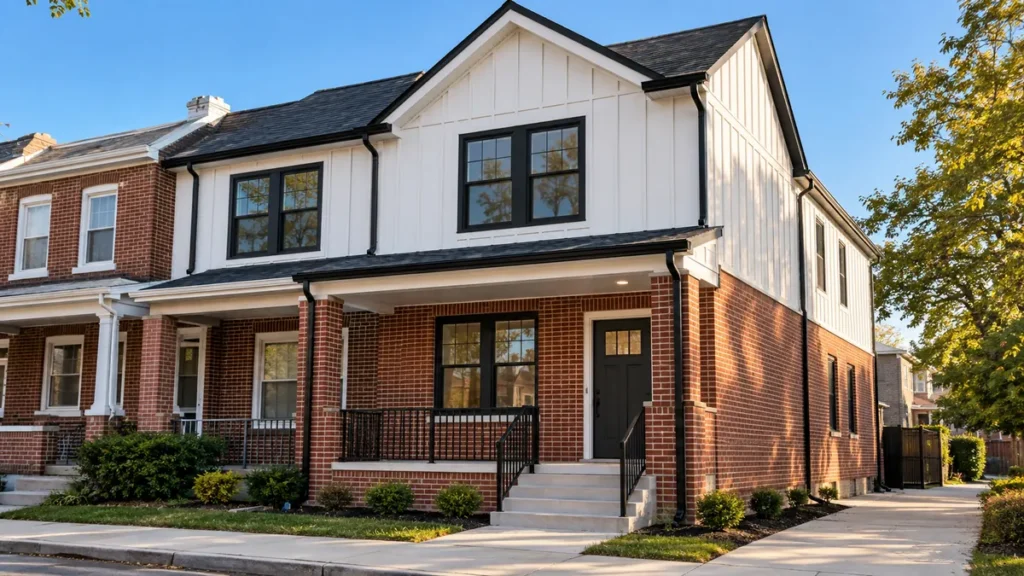
Board and batten siding has gone from barn exteriors to one of the most requested looks in home remodeling. The vertical lines make a house look taller and more modern, and the style works on farmhouses, contemporary builds, and classic Philadelphia twins.
Before you commit, you need to know what it costs, which material fits your budget, and how it holds up in a climate with humid summers and freeze-thaw winters. This guide covers all of it.
What Is Board and Batten Siding?
Board and batten is a vertical siding style made of two parts:
- Boards: wide vertical panels, usually 8 to 12 inches across, installed side by side.
- Battens: narrow strips, usually 1.5 to 3 inches wide, installed over the seams between boards.
The battens cover the joints, which keeps water out and creates the raised, rhythmic pattern the style is known for. Originally it was a practical way to side barns and outbuildings with rough-sawn lumber. Today it’s made in vinyl, fiber cement, engineered wood, and metal, so you can get the look without the maintenance of real wood.
Board and Batten vs. Vertical Siding: What’s the Difference?
Homeowners often use these terms interchangeably, but they aren’t the same:
- Vertical siding is any siding installed up and down. That includes board and batten, but also tongue-and-groove, reverse board and batten, and vertical panel products like T1-11.
- Board and batten is one specific type of vertical siding, defined by the battens covering the seams.
If you want a flat, seamless vertical look, you’re shopping for vertical panel siding. If you want visible raised lines and shadow depth, you want board and batten.
Board and Batten Siding Materials Compared
The material you choose drives cost, maintenance, and lifespan more than anything else.
Vinyl Board and Batten
Vinyl is the most affordable option and the most common choice for full-home installs. Modern vinyl board and batten comes in wide profiles with realistic wood-grain textures and fade-resistant colors.
Pros: lowest cost, never needs painting, easy to clean, resists moisture and insects.
Cons: can crack on impact in very cold weather, darker colors may fade over time, less crisp shadow lines than fiber cement.
Fiber Cement Board and Batten
Fiber cement (brands like James Hardie) is made from cement, sand, and cellulose fibers. It delivers the sharpest, most authentic look of any low-maintenance option.
Pros: very durable, fire-resistant, holds paint well, doesn’t warp or rot, deep shadow lines.
Cons: heavier and more labor-intensive to install, higher cost than vinyl, needs repainting every 10 to 15 years if not factory-finished.
Engineered Wood Board and Batten
Engineered wood (such as LP SmartSide) is wood fiber treated with resins and zinc borate to resist rot and insects.
Pros: real wood appearance, lighter than fiber cement, strong impact resistance, mid-range pricing.
Cons: needs periodic painting, must be installed correctly to avoid moisture problems at cut edges.
Real Wood Board and Batten
Cedar, pine, and other natural woods offer the most traditional look.
Pros: authentic grain and texture, can be stained or painted, renewable material.
Cons: highest maintenance, prone to rot, insects, and warping without regular sealing or painting.
Metal Board and Batten
Steel and aluminum board and batten are growing in popularity for modern and industrial designs.
Pros: extremely durable, fire-resistant, low maintenance, long lifespan.
Cons: can dent, higher cost, a more commercial look that doesn’t suit every home.
How Much Does Board and Batten Siding Cost?
Costs depend on material, the size and shape of your home, how much old siding has to be removed, and whether sheathing or trim needs repair. Typical installed price ranges:
| Material | Typical Installed Cost (per sq. ft.) | Expected Lifespan |
|---|---|---|
| Vinyl | $4 – $8 | 20 – 40 years |
| Engineered Wood | $5 – $10 | 20 – 30 years |
| Fiber Cement | $7 – $14 | 30 – 50 years |
| Real Wood (Cedar) | $8 – $15 | 20 – 40 years (with maintenance) |
| Metal | $7 – $14 | 40+ years |
For reference, a 1,500 square foot wall area in vinyl typically lands around $6,000 to $12,000 installed. The same area in fiber cement often runs $10,500 to $21,000.
Costs that can push a quote higher:
- Removing and disposing of old siding
- Replacing rotted sheathing underneath
- New trim, fascia, and window wraps
- Multi-story homes that need scaffolding
- Accent-only installs (small areas carry higher per-square-foot labor)
The only way to know your real number is an on-site estimate. Wall measurements, access, and hidden damage all change the price.
Pros and Cons of Board and Batten Siding
Pros
- Curb appeal: vertical lines add height and a modern farmhouse or contemporary feel.
- Water shedding: vertical orientation lets rain run straight down instead of sitting on horizontal ledges.
- Design flexibility: works as a full exterior or as an accent on gables, dormers, and entryways.
- Resale value: updated exteriors are one of the strongest curb-appeal upgrades for buyers.
Cons
- Higher cost than standard lap siding: extra battens and trim add material and labor.
- Installation matters more: vertical siding needs proper furring or blocking so the fasteners have something solid to anchor into.
- Not a fit for every architectural style: on some historic homes, it can look out of place.
Board and Batten Style Ideas
Board and batten is versatile. Popular approaches include:
- Full wrap: the whole house in board and batten for a bold, modern farmhouse look.
- Gable accents: board and batten on the upper gables with horizontal lap siding below. This is one of the most popular combinations because it adds interest without the full-house cost.
- Mixed materials: board and batten paired with stone or brick on the lower level.
- Entryway and porch accents: a small section around the front door to draw the eye.
Trending colors:
- Crisp white with black trim
- Charcoal and black for a modern look
- Deep greens and navy blues
- Warm natural wood tones
Batten spacing also changes the look. Narrow spacing (around 12 inches) feels more traditional. Wider spacing (16 to 24 inches) feels cleaner and more contemporary.
Board and Batten Siding on Philadelphia Homes
Philadelphia’s housing stock brings a few things to consider:
- Rowhomes and twins: board and batten works well on rear walls, side walls of end units, and third-floor additions and pop-ups, where it adds a modern look without clashing with the brick facade.
- Climate: freeze-thaw cycles and summer humidity are tough on exteriors. Vinyl, fiber cement, and properly sealed engineered wood all handle Philly weather well when installed with a proper moisture barrier.
- Historic districts: if your property is in a designated historic district or individually listed, exterior changes may need review by the Philadelphia Historical Commission. Check before you order materials.
- Permits: check with Philadelphia L&I about whether your siding project requires a permit, especially if the work includes structural repairs or sheathing replacement.
How to Maintain Board and Batten Siding
Maintenance depends on the material, but these habits extend the life of any siding:
- Wash once a year with a soft brush or low-pressure rinse to remove dirt, mildew, and pollen.
- Inspect caulk and seams each spring, especially around windows, doors, and trim.
- Keep gutters clean so overflow doesn’t run down the siding face.
- Trim back plants at least 12 inches from walls to allow airflow.
- Repaint on schedule for wood, engineered wood, and field-painted fiber cement.
Can You Install Board and Batten Siding Yourself?
Small accent walls are a reasonable DIY project for experienced homeowners. Full-house installs are a different story. Common problems with DIY installs include:
- No furring strips or blocking behind vertical panels, which leads to loose or wavy siding
- Missing or damaged house wrap, which traps moisture
- Nailing vinyl too tightly, which causes buckling when it expands in summer heat
- Poor flashing around windows and doors, which leads to leaks and rot
A professional install also protects your manufacturer warranty. Many siding warranties require installation to the manufacturer’s specifications.
Frequently Asked Questions
Is board and batten siding more expensive than regular siding?
Yes, typically. The extra battens, trim, and labor usually make it 10% to 30% more expensive than standard horizontal lap siding in the same material.
How long does board and batten siding last?
It depends on the material. Vinyl typically lasts 20 to 40 years, fiber cement 30 to 50 years, and metal 40 years or more. Real wood can last decades with regular maintenance.
Can you put board and batten over existing siding?
Sometimes. It depends on the condition and type of the existing siding. Most contractors recommend removing old siding so they can inspect and repair the sheathing underneath before installing new material.
Does board and batten siding need furring strips?
Vertical siding usually needs furring strips or horizontal blocking so fasteners can anchor into something solid. Furring strips also create an air gap that helps moisture drain and dry.
What is the best material for board and batten siding?
Fiber cement offers the best balance of durability and authentic appearance. Vinyl is the best value for budget-conscious homeowners. The right choice depends on your budget, style, and how much maintenance you want.
Can you mix board and batten with horizontal siding?
Yes. Combining board and batten on gables or upper stories with horizontal lap siding below is one of the most popular exterior designs today.
Get a Board and Batten Siding Estimate in Philadelphia
NEF General Contracting installs board and batten siding in vinyl and other materials for homes across Philadelphia and South Jersey. We’ll measure your home, check what’s underneath your current siding, and give you a clear, itemized quote.
Call 267-704-4132 or request a free estimate today.
Recent Comments