

Can you replace roof in winter, or do you have to wait for spring? If your roof is failing and it’s already November, that’s the question on your mind.
The short answer: yes, a roof can be replaced in winter, and a good crew does it well. But it takes the right conditions, the right techniques, and an honest look at the tradeoffs. Some roofs can’t wait. Others can, and waiting may be the smarter call.
Here is what actually changes in cold weather, how a professional crew handles it, and how to decide whether to replace now or hold off until spring.
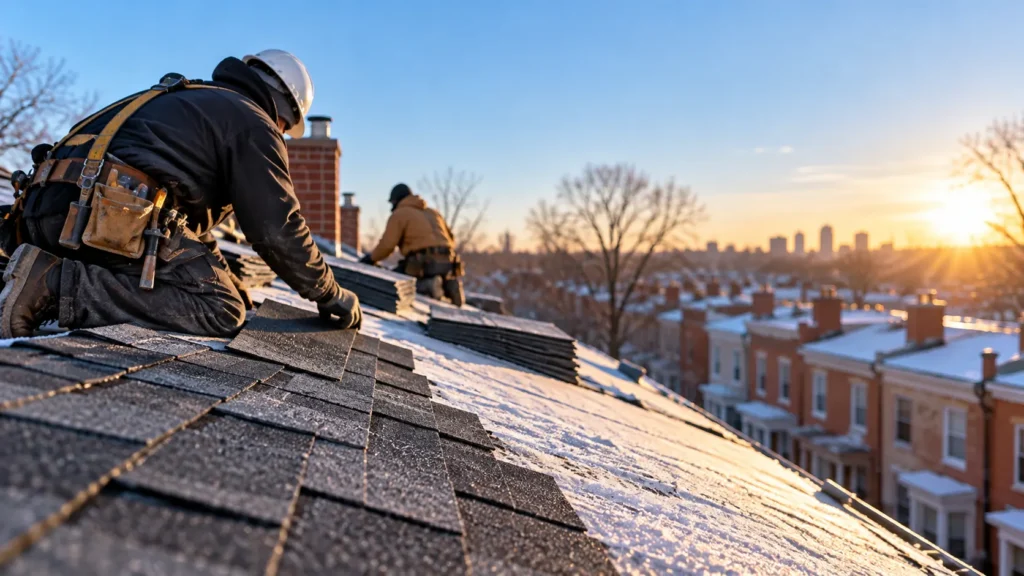
The Short Answer
Yes, with conditions. A winter install works when the crew picks a workable weather window, handles materials carefully, and seals shingles properly. It goes wrong when a contractor treats January like July.
Philadelphia winters swing above and below freezing, which means there are usable days from late fall through early spring. That’s a big reason winter roofing here is realistic, not a last resort.
How Cold Weather Affects Roofing Materials
Cold changes how roofing materials behave. That’s the real reason winter installs get a bad reputation.
Shingle Sealant Strips
Asphalt shingles have a strip of adhesive that bonds one shingle to the one below it. That bond usually forms with warmth and sunlight. In cold weather it forms slowly or not at all, which leaves shingles more exposed to wind lift until they seal.
Brittle Shingles
Shingles get stiffer in low temperatures. Nailing them cold can crack or chip them if the crew isn’t careful, so technique matters more.
Underlayment, Adhesives, and Sealants
Some underlayments, flashing sealants, and adhesives have their own minimum temperatures. Below them, products may not stick or cure as designed.
Manufacturer Guidelines
Shingle manufacturers publish installation instructions, including cold-weather guidance. A good contractor follows them, because installing outside those guidelines can affect your warranty. Ask which manufacturer’s guidance your roofer is following.
How a Good Crew Handles a Winter Install
Experienced roofers don’t just work through the cold. They change how they work.
- They watch the forecast. They schedule around rain, snow, and hard freezes, and pick days with workable temperatures and dry conditions.
- They hand-seal shingles. Where sealant strips won’t bond on their own, crews apply roofing cement under shingle tabs to hold them down.
- They store and handle materials carefully. Shingles kept somewhere warmer are easier to work with and less likely to crack.
- They work the warmest hours. Mid-morning to mid-afternoon is usually the best window.
- They never leave the roof open. Any section stripped down gets covered and made watertight by the end of the day, with a tarping plan if the weather turns.
- They adjust their nailing. Correct nail placement and pressure matter even more when shingles are stiff.
If a contractor can’t explain these steps, that’s a red flag.
Winter vs. Spring Roof Replacement
Neither season is simply better. Here is how they compare.
| Factor | Winter | Spring |
|---|---|---|
| Scheduling | Crews are often less booked, so start dates can come sooner | Busy season, longer waits for an estimate and a start date |
| Weather | Fewer usable days, with delays for snow, rain, and hard freezes | More consistent weather, though spring storms still cause delays |
| Shingle sealing | Slower to bond, so hand-sealing may be needed | Bonds naturally in warmer temperatures |
| Risk while you wait | None. The old roof is replaced now | Your damaged roof faces months of freeze-thaw and winter weather first |
| Prep time | Less time to line up financing or an insurance decision | More time to compare bids and plan |
The biggest hidden cost of waiting is the winter itself. A roof that’s already failing keeps taking on water, and small leaks can turn into rotted decking and damaged insulation before spring arrives.
When You Shouldn’t Wait
Replace now, or at least get a temporary fix right away, if you have:
- An active leak or water stains spreading on ceilings
- Storm damage, such as missing shingles or a damaged section
- Soft, sagging, or rotted decking
- An insurance claim already in progress
- Repeated ice dams, which can point to attic or roof problems (see our ice dam guide)
Winter freeze-thaw cycles make existing damage worse. Our post on freeze-thaw roof damage in Philadelphia explains how.
When Waiting Is Fine
Waiting until spring can make sense if your roof is aging but not leaking, you have a flexible timeline, or a small repair can bridge the gap. Not sure whether you need a repair or a full replacement? Our repair vs. replace guide walks through it, and these 7 warning signs your roof needs repair or replacement can help you decide.
What to Ask Your Roofer Before a Winter Install
- Which shingle manufacturer’s cold-weather guidelines will you follow?
- Will you hand-seal the shingles?
- What’s your plan if rain or snow arrives mid-job?
- How will the roof be covered at the end of each day?
- Will a winter installation affect my manufacturer warranty?
- What temperature range do you stop working in?
A confident, specific answer to each is a good sign. Vague answers aren’t.
Replace Roof in Winter: Frequently Asked Questions
What’s the minimum temperature to install shingles?
There’s no single number. It depends on the shingle, the sealant, and the manufacturer’s instructions. A reputable contractor follows the guidance for the exact product going on your roof.
Will a winter installation void my warranty?
Not if it’s done according to the manufacturer’s instructions. Ask your roofer how they handle cold-weather requirements, and get it in writing.
Will a winter-installed roof leak?
Not if it’s installed correctly. Hand-sealing, careful handling, and good weather planning are what protect it. Poor workmanship causes leaks, not the season by itself.
Is it cheaper to replace a roof in winter?
Sometimes. Crews are often less busy, so you may get easier scheduling if you replace roof in winter, but prices depend on the job and your contractor. Compare written estimates instead of assuming.
How long does a roof replacement take?
Most residential replacements take one to a few days, depending on roof size and weather. Winter can add delay days when conditions aren’t safe to work.
Get a Free Replacement Estimate
Whether you decide to replace roof in winter or wait for spring, start with a clear picture of what your roof needs. NEF General Contracting offers free roof inspections and replacement estimates for Philadelphia homeowners. Request your free estimate or call 267-704-4132.
Recent Comments